Kampala, Ugnda | October 2026
More than 130 bankers, entrepreneurs, regulators and development partners gathered in Kampala to argue that gender finance and green finance are one agenda.
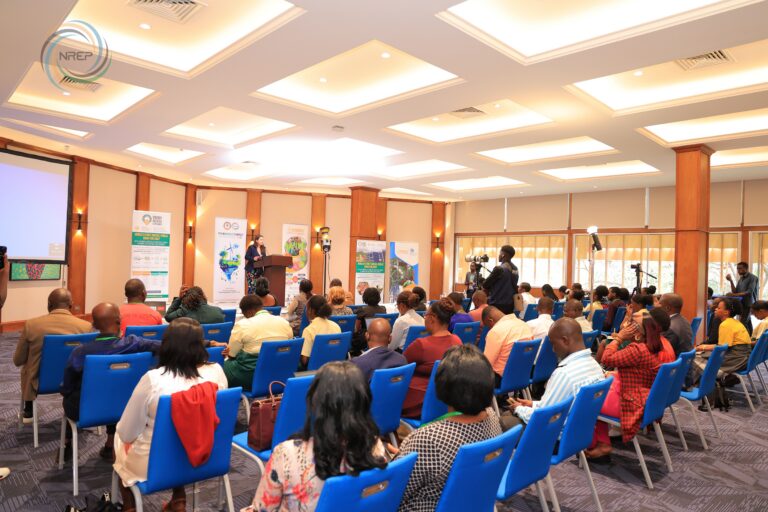
On 4 November 2026, the Uganda Green Enterprise Finance Accelerator (UGEFA) held its 6th annual Green Finance Dialogue Forum (GFDF) at the Mestil Hotel, Kampala, under the theme “Financing Women Led Enterprises for Uganda’s Green Economy Transition.” Implemented by adelphi global and funded by the European Union, the Forum gathered more than 130 entrepreneurs, banks and development finance institutions, Business Development Service (BDS) Providers and development partners around one argument, carried from the opening remarks to the closing plenary: green and gender finance face the same structural barriers, perceived risk, high transaction costs and collateral gaps, and so need similar solutions. The day traced that argument from rhetoric to practice.
A good match, in the making
Opening the Forum, Cristina Bănuță, Programme Manager for Access to Finance, Climate Finance, Agribusiness and Land at the EU Delegation to Uganda, set the tone with a comparison: “The title of the conference, Gender Finance meets Green Finance, may sound like a slogan on a dating platform. And indeed it looks like quite a good match.” she said, pointing to shared obstacles: limited collateral, trust issues, and being seen as risky by financial institutions. Gender equality, she noted, is central to the EU’s work in Uganda, and access to inclusive finance is a pillar of the Global Gateway Initiative, which provides guarantees, blended facilities and technical assistance, with UGEFA as a working example. “The question is not whether the capital is out there,” she said, “but how to deploy it and serve the substantial demand.” For that, the commercial sector cannot afford to ignore a large part of its potential clients: entrepreneurs who are women.
Christine Meyer, UGEFA Programme Lead at adelphi global, set out UGEFA’s two-sided approach: building green enterprises’ finance readiness on the demand side, and building banks’ pipelines and blended products on the supply side. She shared results to date: 3,663 applications received, 280 green enterprises in portfolio, supported by 35 Business Advisors. This led to a 38 % average yearly revenue increase among supported enterprises; UGX 36.6 billion of green debt deployed in partnership with UGEFA’s nine partner banks; at a 65% approval rate; 58 % of funded enterprises are first time borrowers; furthermore, UGEFA trained 13 banks through 15 Green Finance Academy sessions since UGEFA’s inception in 2020.
She welcomed Diamond Trust Bank Uganda and Stanbic Bank Uganda as new partner banks, and launched two programmes: the 30 month UGEFA BDS Innovation Studio, and UGEFA4Her, comprehensively addressing structural barriers, thinner credit histories, limited collateral, a perceived double risk faced by women-led (green) businesses through tailored capacity building formats and a specific financial instruments, designed to meet the needs of women-led enterprises.
Godfrey Sebaana, CEO of Diamond Trust Bank Uganda, was candid about the starting point:
“With new partners such as adelphi global, the EU, development banks such as KfW and others, we have started our journey into greening our finance portfolios. There are quite some green capital pools out there, reaching higher and higher levels. This journey is taking place right now, and DTB is excited to go it together with UGEFA.”
Aaron Akampa, Head of Enterprise Banking at Stanbic Bank Uganda, linked the case directly to gender: “Our customers are increasingly investing in solar, energy efficiency and climate resilient businesses. Not because it is fashionable, but because it makes economic sense. It reduces their costs, improves their profitability and makes them more resilient” he said. He also underlined the case of financing women-led enterprises, citing internal data showing women customers achieve up to 20 per cent better repayment rates.

The real barrier: structural, not capital
What opportunities exist for Ugandan banks to develop and scale green and gender-responsive lending products, and which challenges have to be tackled? What would it take for gender-responsive green finance to move from promising initiatives to a scaled market opportunity in Uganda and why is now the right moment for financial institutions to act?
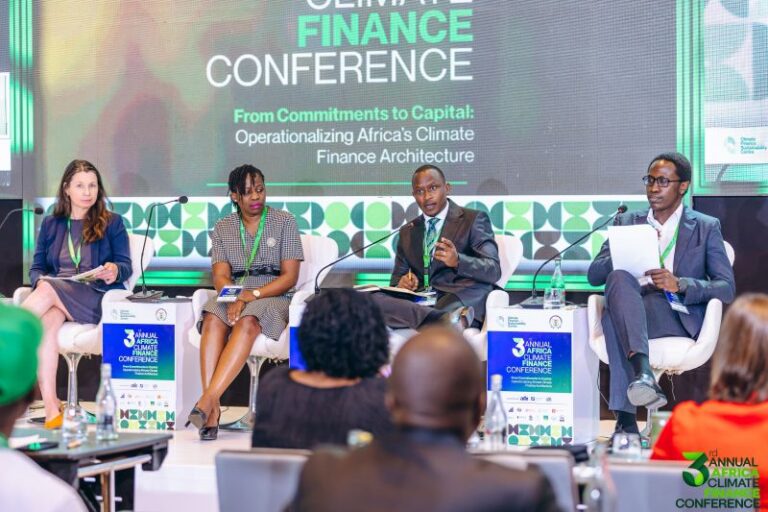
The morning panel, “Setting the Scene: The Market Opportunity and the Barriers,” pursued exactly these questions. Mable Charity Namala of KfW Development Bank argued that “Public funds will never be enough for all these commercial opportunities. That is why we are building instruments like first loss facilities, guarantees and climate insurances, so banks have the appetite to lend,” noting that “in large, and high-potential sectors for Uganda, such as agriculture and forestry, there is still a lot of room to operate in a greener way. At the same time, financial instruments and products in such sectors are still thin, as they are capital intensive and returns materialize only over long periods of time. This also makes it challenging for women to enter these sectors”. Cristina Bănuță of the European Union Delegation to Uganda returned with a wider framing: “Why inclusive finance now? Because there is a strong alignment right now of actors to go into this direction. Inclusivity is a strong focus in the SDG on global level, going through the green transformation becomes a necessity for the financial sector due to many recent regulatory steps by the Government of Uganda. […] The question is, is lack of capital really still the biggest stumbling block?” she asked.
Caroline Rukundo Benda of the Ministry of Gender, Labour and Social Development argued that interest rates and bank account costs should be seen not only as a problem, but commercial funding should be seen as an opportunity for women entrepreneurs to build a longer-term financial reputation. Ruth Aisha Kasolo Biyinzika of the Private Sector Foundation Uganda pushed the room to “think bigger,” and, drawing on the GROW Project, challenged assumptions about lending size: “banks’ hesitation about the size of capital that can be lent to women is wrong.” She pointed to a deeper structural issue: “boys and men still receive the majority of wealth in the family. Women’s business profits are often used for men’s growth ambitions in the end.”
That diagnosis was felt directly by entrepreneurs in the room. Susan Namirimu, Founder of Mtindo, put it plainly:
“Looking at this from the side of the enterprises, we struggle so much to make ends meet every month; still, access to finance is mostly withheld. We are asking the financial institutions to do a little bit more for us, to provide capital more realistically.”
Four business women shared their success stories and how they were able to tackle challenges related to limited collateral, trust issues, and being seen as risky by financial institutions:
Edina Amali, from Golden Peafowl Company Ltd., Jessica Kakwano, from Good Glass Ltd, Jane Babirye from Gocolors Paint Uganda Ltd and Jane Frances Auma from Shanoja Investments Ltd. These four women entrepreneurs operate in different sectors but share similar challenges, including restrictive gender norms and a lack of collateral. They shared how they started and grew their green businesses into thriving enterprises and inspiring examples how to successfully overcome gender-related barriers.

A green framework, Ready for Operationalisation
In the afternoon keynote, James Muhwezi, Senior Climate Finance Officer at the Ministry of Finance, Planning and Economic Development, set out the Ministry’s vision for Uganda’s National Green Taxonomy (NGT), launched in September 2025. Taxonomies have become the main tool for defining green finance. More than 60 are now published or in development worldwide, yet fewer than one third of developing economies have one. Muhwezi stressed that a taxonomy is not a fund. It defines what counts as green, while concessional benefits come from the instruments built around it.
Uganda drew on the EU Taxonomy and the Climate Bonds Initiative Standard to give the NGT international credibility.
James Muhwezi shared lessons from other countries.
- Mongolia grew green lending from 2.5 to 3.0 per cent of its loan book between early 2020 and early 2024. Muhwezi called it the strongest results story because outcomes are tracked and reported, and the taxonomy was paired with incentives and concessional credit lines. In his words, “what is measured and reported can be managed.”
- Colombia started with pilots. It tested its taxonomy with five institutions and produced practical tools before wider rollout. Today, about two thirds of its reported green lending is taxonomy aligned. Its lesson: “governance, pilots, and data from day one.”
What the NGT requires
An activity counts as aligned with the NGT only if it makes a substantial contribution to a sustainability objective and does no significant harm to the others. It must also meet minimum social safeguards. The first edition, its Compendium, covers 29 eligible activities in 9 sectors: 19 for mitigation and 10 for adaptation. These include forestry, agriculture, manufacturing, electricity, water, sewage and waste, construction, and agricultural insurance. Hydropower, transport, clean cooking and urban resilience are not yet covered. The NGT will be reviewed at least every three years.
“The measure of success is not the framework launched,” Muhwezi concluded, “but the credible green investments financed and reported through it.“
The Ministry’s vision
The aim is a taxonomy that is used, not shelved. NGT criteria should enter the credit, risk and reporting systems of financial institutions, and the planning, budgeting and investment decisions of government. The NGT is also a transparency tool: users disclose their share of taxonomy aligned activities, so portfolios can be compared. It is designed to apply across corporate and consumer lending, project finance, SME finance, green bonds, equity, insurance, guarantees, grants and technical assistance. James Muhwezi highlighted: “And there is a gender layer: taxonomy alignment is necessary but not sufficient. Women-led enterprises in agriculture, clean energy and the circular economy must be deliberately reached, or green finance will bypass them.“
Building that second layer was the task of the day’s afternoon sessions:
The Session “From Taxonomy to Transaction”, in partnership with IFAD, discussed pathways to implement Uganda’s National Green Taxonomy. Interactive roundtable discussions explored what kind of tools, measures and activities could support financial institutions to in eligibility assessment and reporting, risk assessment and green and inclusive product design. Fredrick Barasa, Programme Officer at IFAD shared insights and experiences how the NGT-aligned ARCAFIM taxonomy is translated into products at financial institutions’ level. He indicated five steps to be undertaken: (1) Establish taxonomy alignment (to meet key taxonomy criteria and technical screening criteria), (2) Identify products (new, expanded or modified) subject to risk management process, (3) conduct (internal) due diligence (consult relevant functional areas such as credit, compliance, audit, legal), (4) Incorporate product into risk measurement, monitoring and controlling and (6) launch product and perform monitoring.
The session showed that capacity building and technical assistance, digital tools to support eligibility assessment and impact measurement, as well as dedicated Knowledge Hubs and focal persons (inside financial institutions and outside) can help to accelerate the operationalisation of the NGT.
During the co-creative session “Build the Product: Co-Designing Financial Products for Women-Led Green Enterprises in Uganda”, held in partnership with the Uganda Women Entrepreneurs Association (UWEAL), chief executive Judith Amanya highlighted the mismatch between available finance and women’s needs, including limited collateral and records, seasonal cash flow, high upfront green investment costs, household pressures and information gaps. Group work linked enterprises’ needs for finance, financial literacy and market access with lenders’ need for reliable client and cash flow evidence, especially where collateral is limited. Early product ideas included affordable group-based working capital loans through existing savings groups for waste management and other green enterprises, with quicker disbursement, low processing fees and more flexible collateral, as well as blended asset finance solutions with simpler applications. The shared design priority was to align finance with women’s business realities while giving lenders practical ways to verify clients and manage risk.
At the BDS Innovation Studio, participating business advisors refined two flagship initiatives for Uganda’s green business development services ecosystem: a peer learning platform and a financial institutions symposium. The two initiatives target the same SME finance-readiness gap from different angles: the peer platform addresses capacity and coordination among Business Advisors, while the symposium addresses trust and information between Business Advisors and financial institutions.
The Forum demonstrated that capital is available and that a proven market exists. What remains outstanding is the deployment of this capital at scale, which a solid pipeline of bankable women-led enterprises, de-risking instruments, concessional capital and tailored financial products can help to achieve.
Would you like to learn more? Please reach out to Christine, Programme Director, at: meyer@adelphi.de.