Kampala, Ugnda | October 2026
Uganda’s renewable energy sector doesn’t lack good ideas or enterprises ready to grow. What it needs is local finance that reaches the businesses delivering solar systems, clean cooking, biogas and productive-use solutions. That was the vantage point from which Dr. Lena Giesbert represented the Uganda Green Enterprise Finance Accelerator (UGEFA) at REC 2026 at the Kampala Serena Hotel, in a keynote mini-training and a Deal Room panel. Both drew on UGEFA’s experiences in supporting green enterprises and partnering with local commercial banks to scale green business models and investments. Most of UGEFA’s portfolio is in renewable energy, mainly solar, biomass and biogas, and clean cooking, and many of its other green and “go green” enterprises also invest in renewable energy supply.
Keynote: Catalysing local finance for renewable energy enterprises and investments
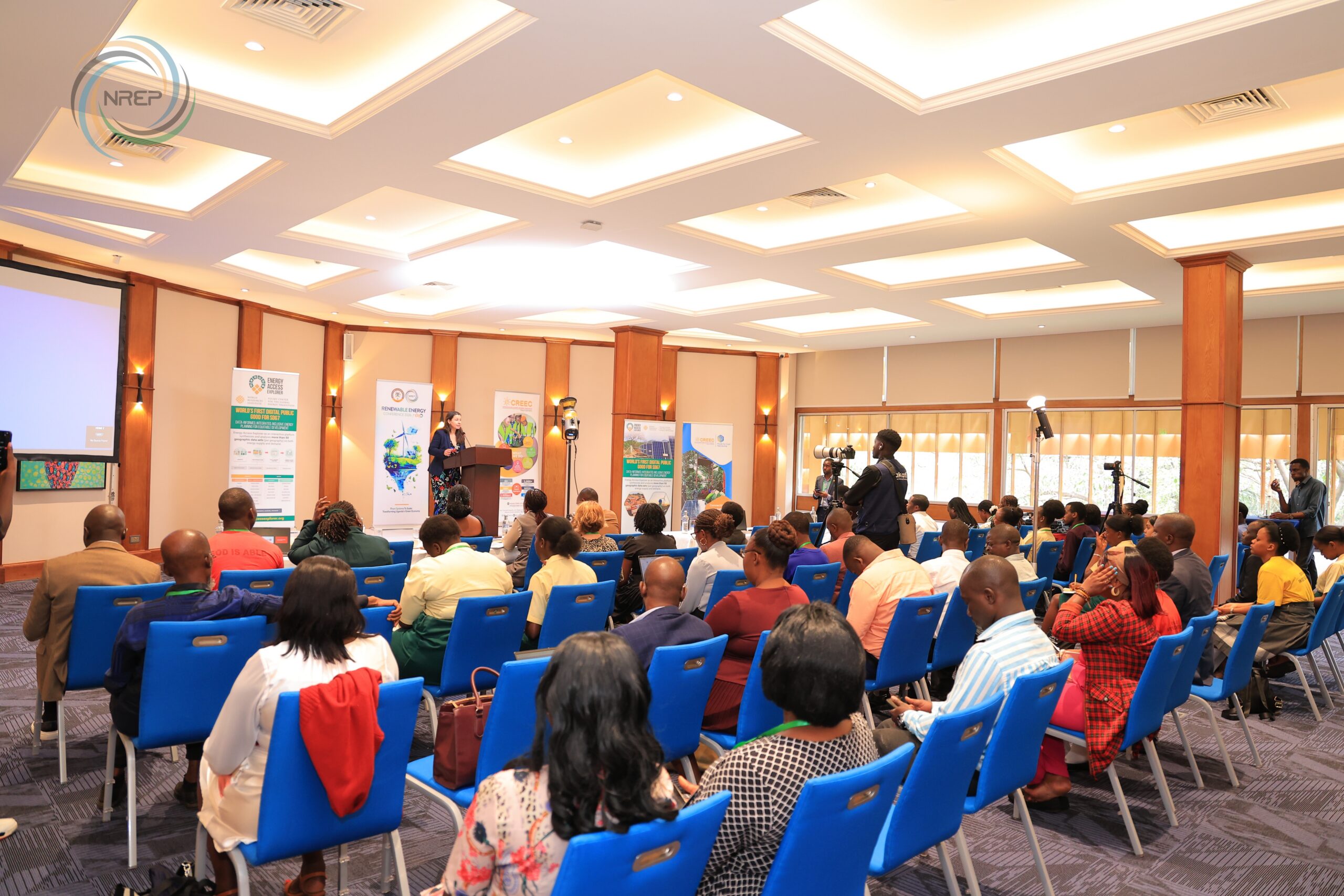
Dr. Giesbert followed the opening remarks from the Ministry of Energy and Mineral Development (MEMD) with a tailored training input for local financial institutions (LFIs) and other participants, drawing on UGEFA’s lessons and experience with renewable energy enterprises and Productive Use of Renewable Energy (PURE) investments. The session was organised by World Resources Institute (WRI) Africa and the Centre for Research in Energy and Energy Conservation (CREEC).
Live Mentimeter polling made challenges concrete. Participants named limited awareness and financial literacy, lack of knowledge about funding sources, affordability and costs, and the length of qualification processes as the biggest hurdles. While they scored the sector’s perceived viability by LFIs rather positively, the participants were least positive about whether financial institutions are equipped to assess renewable energy investments. That gap in lender capacity is what UGEFA’s technical assistance for partner banks is designed to close.
Two points from the presentation stood out for lenders. Renewable energy enterprises often sell on credit, which makes the business a lender in its own right and locks up working capital. In agriculture-linked PURE investments, income follows the seasons. In both cases, finance works best when loan structures reflect how an enterprise actually earns its money.
The discussion centred on three themes. The first was cost of capital. UGEFA addresses this by de-risking loan capital via grants, paid upfront or at the back end, to reduce the principal on which the partner bank charges interest. Enterprises still access the bank’s full product range and build a lasting banking relationship. The second was collateral and working capital. Within UGEFA, collateral constraints are addressed through the blended instruments, and where repayment is difficult UGEFA stays engaged throughout. The third was a noted lack of awareness among the enterprises. UGEFA aims to address this gap by tailored outreach campaigns and application clinics tied to each call round and its capacity programme, the Catalyser. Women-led businesses further have access to a Collateral Cover Contribution and the UGEFA4Her Track.

Deal Room panel: financing agri-tech SMEs
The panel on “Financing Priorities for Scaling Regenerative Agriculture (RA)-PURE Solutions Among Uganda’s Agri-Tech SMEs” was part of the PURE Climate Finance Deal Room, hosted by the National Renewable Energy Platform (NREP) and co-moderated with Flourish Hub, where green enterprises pitched their innovative solutions before and after the discussion. UGEFA is grateful to both hosts, and to its fellow panellists from FSD Uganda, Pearlbank, and Einstein Rising.
Dr. Giesbert’s main point was that no single instrument fits every business. Finance should match an enterprise’s stage, how it earns revenue and what it needs to invest. Seasonal agricultural income, for example, rarely supports equal monthly repayments.
UGEFA’s Partial Repayment Scheme, Results-Based Grant and Collateral Cover Contribution each address a different barrier, while the partner bank still appraises and provides the loan.

What agri-tech and other green SMEs can take from this is a broad toolbox, and UGEFA’s specific offers for women entrepreneurs. UGEFA warmly invites RA-PURE and other green enterprises, including those who pitched in the Deal Room, to apply to its next call for applications, opening in late 2026.