
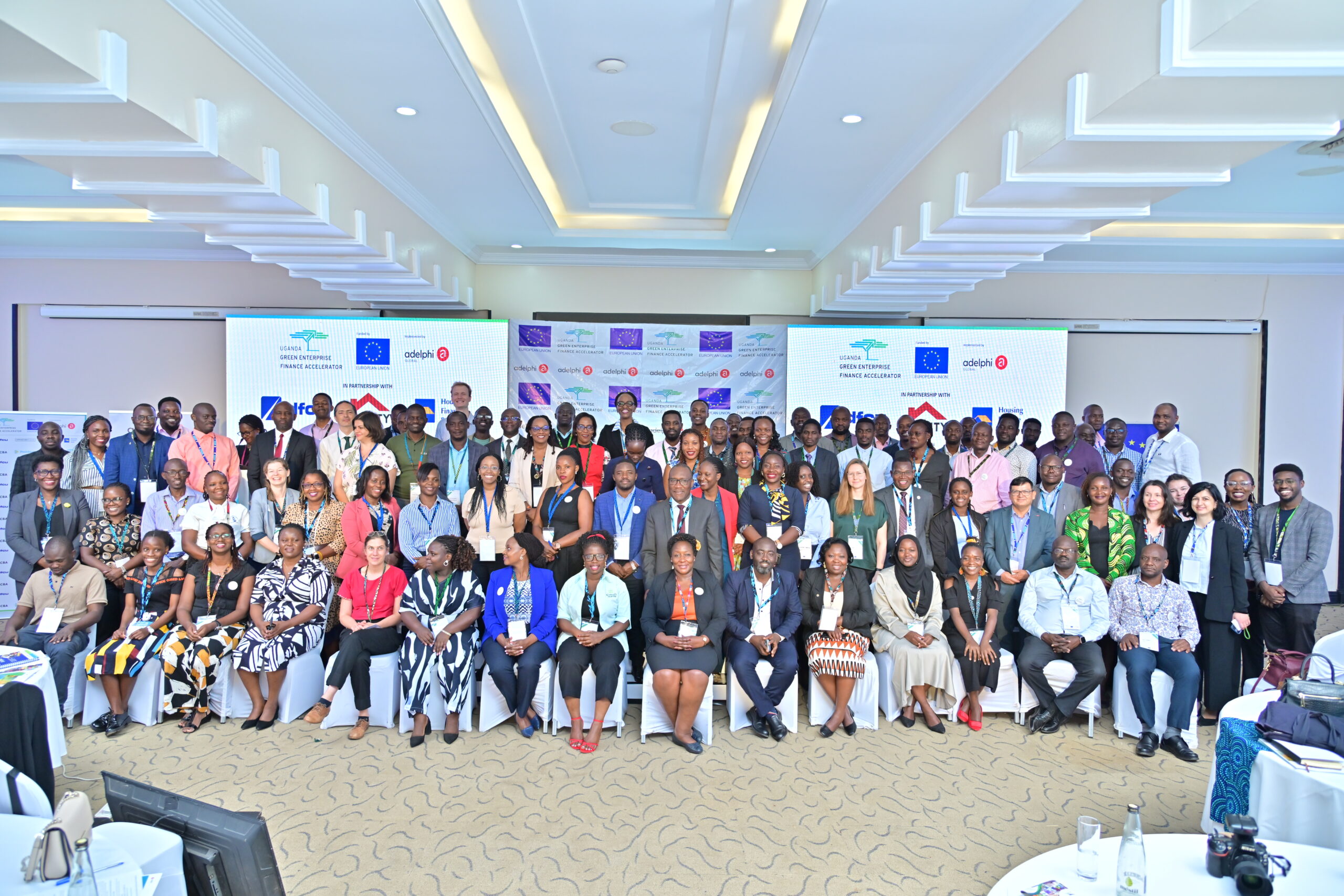
Kampala, 16th October 2025 – The UGEFA Green Finance Dialogue Forum (GFDF25) convened over 110 stakeholders from finance, government, enterprise, and development partners at Méstil Hotel in Kampala to chart the next chapter for green SME finance in Uganda. Under the theme “From Risk to Opportunity: Mainstreaming Green Finance for SMEs,” participants explored how to move green finance from a niche activity to become the new normal in Uganda’s financial sector.
Envisioning the next phase for green SME finance
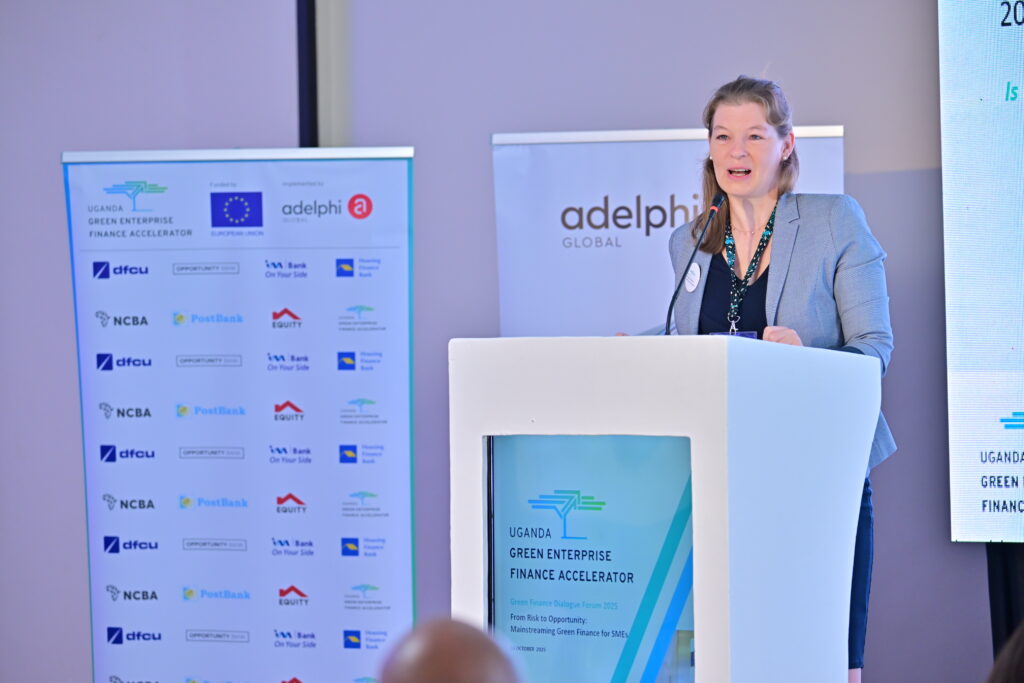
Opening the forum, Christine Meyer, UGEFA Programme Lead at adelphi, reflected on UGEFA’s evolution and its role in Uganda’s finance ecosystem: “Over the past years, UGEFA has witnessed and contributed to a remarkable evolution in Uganda: Green finance is no longer a niche activity, but is becoming embedded in the operations of Uganda’s financial institutions.” Christine Meyer showcased achievements from UGEFA’s first phase, including 206 enterprises supported, 31.85 bn UGX in green debt finance facilitated, 13 banks trained, and 38% year-on-year revenue growth among portfolio enterprises.
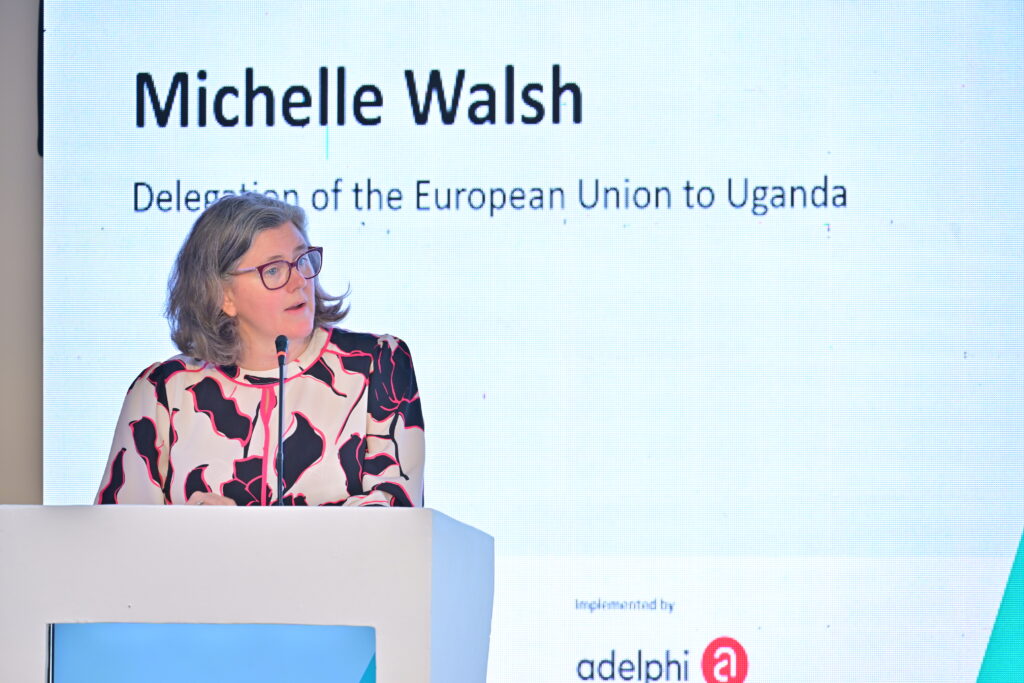
Next, representing the European Union Delegation to Uganda, Michelle Walsh, Team Leader Green Growth and Private Sector, highlighted how the market has shifted: “Green Finance has evolved from a niche or CSR activity to a market opportunity for financial institutions,” adding to UGEFA’s important work: “UGEFA works because it builds bridges[…] and contributes to creating a green finance ecosystem in Uganda”.
Both Christine and Michelle highlighted that challenges remain: While green capital is increasingly available, deploying it to SMEs at scale remains a challenge. Barriers such as collateral gaps, limited green risk appraisal capacities and high transaction costs still limit the transformative potential of green finance.
Setting the scene: From risk to opportunity
A high-level panel discussed ways Uganda can speed up the growth of green finance, such as turning climate and environmental risks into drivers of innovation and investment. Panelists shared their insights on the necessary policies, instruments, and actionable steps to expand access to green finance and strengthen the country’s green investment ecosystem.
Dr. Colin Agabalinda of ARCAFIM–IFAD called for greater ambition in the sector: “Physical risks, such as crop loss or flooding, strongly affect smallholder farmers and directly translate to risks for the financial sector. Making green finance the new normal must be the goal.”
Dr. Lena Giesbert of adelphi emphasized that, in addition to the physical risks that are already material to borrower cash flows and asset values, transition risks are increasing and require portfolio adaptation. She noted that investing in climate-smart agriculture or renewable energy infrastructure creates long-term value and competitive advantage. “As Uganda’s green finance architecture takes shape, we should treat transition risk as a blueprint for action. As demonstrated by UGEFA, we must pair the right financial instruments with targeted support to make climate risk bankable SME growth.”
Concluding the discussion, Diana Nanono Ssengendo of dfcu Bank emphasized the importance of a profound mind shift. “Until we really understand climate change, we will keep going around it and its core issues,” she cautioned.

Green Enterprise Champions: Success factors for growth
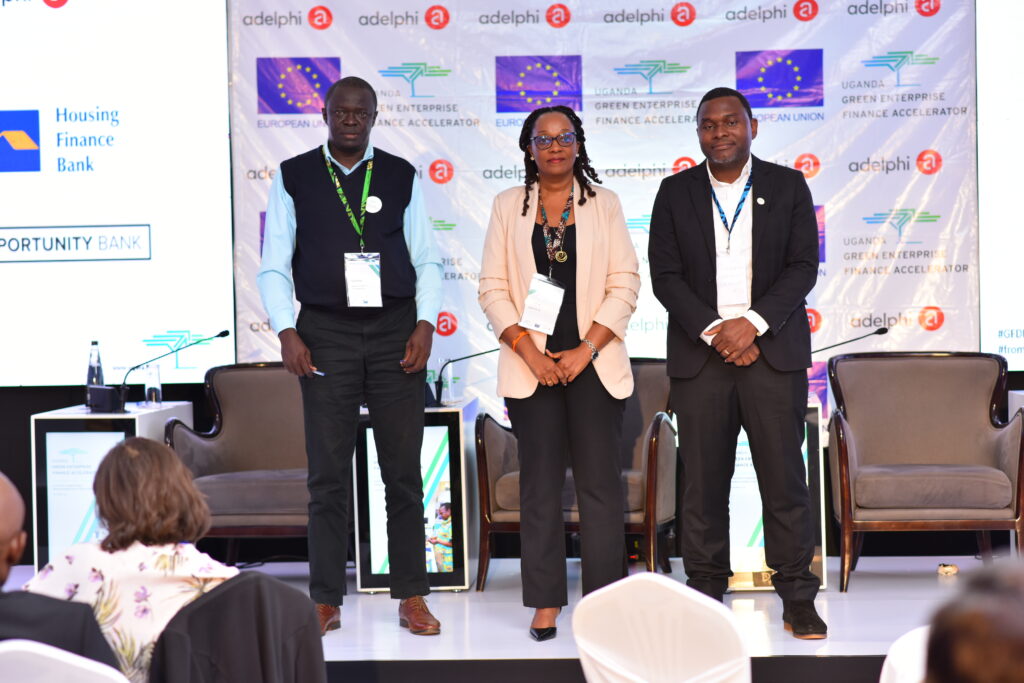
During the next session, three green enterprises supported by UGEFA pitched their businesses to the audience. They demonstrated how they are turning climate-related challenges into investable opportunities. They presented the success factors of their businesses and explained why their business ideas work. Among the factors mentioned were a clear value proposition linked to local needs and the ability to solve real market gaps with context-appropriate green solutions. Another factor highlighted was their deep expertise in the products or services they offer. Tonny Eluk of Bambou Planting Empowerment for example, emphasized the importance of forming an understanding within the customer groups about the particularities of bamboo planting and how to grow it commercially without it spreading widely.
Founder of Krystal Ice, Linnet Akol, shared: “The money is never enough; when you start with something new, innovative, all the banks see is risk. UGEFA has exposed us to new partners and created credibility for our business.” Similarly, Harron Tusubira from Greencircle expressed his view on the UGEFA programme: “Our partnership with UGEFA was transformational, as it helped us to become formalised and therefore bankable. This led us to secure a major contract that marked a significant turning point to growth for the company.” Lastly, Tonny Eluk, founder of Bambou Planting Empowerment, highlighted the success his enterprise had collaborating with UGEFA: “Thanks to UGEFA, we were able to support more than 180 farms in the sustainable growing of bamboo.”
Expand green finance opportunities – Interactive plenary
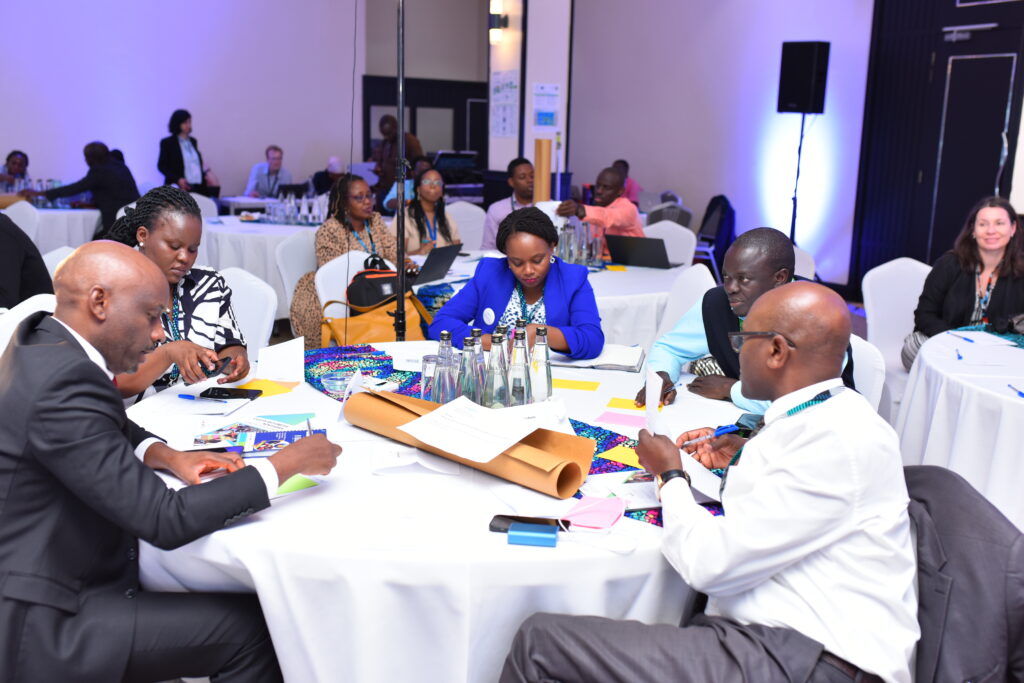
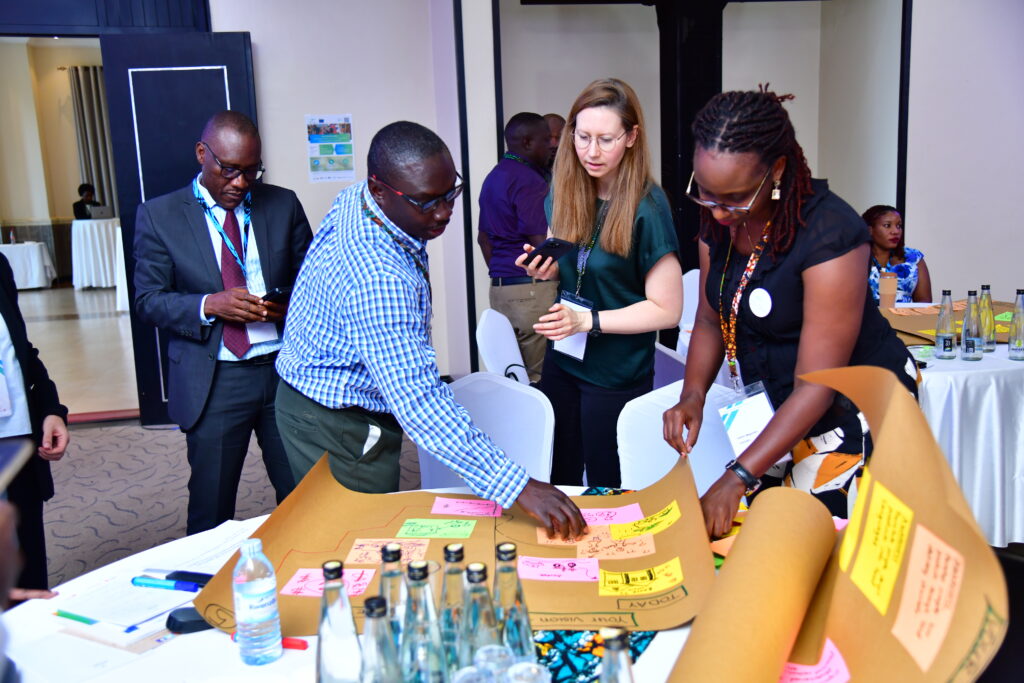
During the first afternoon session, participants discussed strategies for expanding green finance horizontally, across sectors and underserved small-to-medium enterprise segments, as well as vertically, through deeper integration into existing markets. Through interactive table sprints, participants identified innovative approaches to broaden outreach and increase the uptake of green financial products. The groups identified the need to raise awareness of climate-related risks and green finance opportunities. Additionally, one group emphasized the importance of fostering collaborations, as the green finance market is fragmented and characterised by “silos,” which hinder wider impact. Furthermore, they recommended promoting partnerships between financial institutions and green enterprises to institutionalise green finance as a core financing pillar. Lastly, participants suggested governmental initiatives on interest rates for green loans as a way to incentivise the financial sector to include more green finance in their portfolios and make it widely accessible. The session concluded with a plenary “harvest,” during which the groups presented and prioritized key ideas. Insights and proposals were recorded on brown paper and shared in the plenary session to promote cross-group learning and discussion.


Practitioner Labs – From risk awareness to bankable pipelines
During the last session of the GFDF, the participants were separated into three action-oriented breakout sessions developed practical steps, tools, and collaboration models on the following three topics:
Financial Inclusion through Gender-Responsive Design:
SSelina Blum (adelphi) and Barbra Akori (Challenges Uganda) facilitated a breakout session on “Financial Inclusion through Gender‑Responsive Design”. The focus was on co‑creating prototypes of financial instruments to improve women’s access to green finance, especially in the sectors of agriculture, clean energy and waste management. The session opened with a joint discussion of the barriers women entrepreneurs face when seeking finance. Key points included limited collateral, smaller loan sizes, limited credit histories, and social norms and caregiving responsibilities that make capacity development training difficult to attend. Participants also unpacked sector‑specific hurdles: land ownership constraints and concentration in lower‑value activities in agriculture; overlapping personal and business cash flows and scarce growth capital in energy; and formalisation challenges and stigma in waste management jobs.
In the next step, UGEFA’s gender strategy was presented, highlighting the new mechanisms integrated into the programme to specifically support women entrepreneurs.
Building on the presented and discussed insights, groups collaboratively prototyped gender‑inclusive financial solutions for women entrepreneurs across green sectors, using an “Idea Canvas” approach to develop new ideas. The sector‑based groups (agriculture, energy, waste) took the identified barriers as a starting point and developed suitable solutions—summarising core features, clarifying the user need and value proposition, and sketching how the instrument would work in practice. Groups then shared concise pitches of their ideas. Many prototypes centred on cooperative asset leasing models that reduce the need for traditional collateral and spread risk like in the form of shared purchasing and usage of assets by cooperatives, which help women entrepreneurs qualify for loans by spreading risk and reducing collateral requirements. Lenders can underwrite against the cooperative’s collective guarantee and the cash flows generated by jointly used equipment, rather than individual land titles or high‑value assets.
The session concluded with concrete next steps outlining how the discussion points flow into the gender approach of UGEFA Phase II.
Green Business & Investment Opportunities Along the Value Chain
Inspired by the National Green Taxonomy, Christine Meyer (adelphi) facilitated a break-out session together with Fahad Ndugwa (Ancywax) and Lena Giesbert (adelphi) in which participants mapped investable green business business models and investment opportunities across agriculture, construction, and waste, to showcase pipelines for financial .
Regarding agricultural value chains, participants saw strong potential in efficiency upgrades for plant nurseries (especially solar irrigation), water‑efficient and automated solar irrigation systems, renewable‑energy and energy‑efficient processing machinery, eco‑friendly and reusable packaging, and warehouse upgrades powered by renewables; innovative options included converting agro‑ and forest‑waste into inputs (biochar fertiliser) and using biochemical preservatives to extend shelf life sustainably. In terms of promising business models, the group emphasized digital tools (simple data‑input software and full traceability systems), sustainable farm‑management services that use monitoring to improve input efficiency and pest/disease control, horticulture seedling nurseries with greenhouses, biogas system construction that turns processing waste into manure, and aggregation/out‑grower services to secure volumes—linking value chain stages through circularity rather than treating them as silos.
Participants working on the waste value chain prioritized establishing collection hubs and materials recovery centers to solve feedstock constraints backed by robust sorting and processing machinery and more efficient compaction. Recycling into higher‑value products—particularly packaging and construction materials (e.g., glass to road/tarmac material, plastics to paving blocks)—was viewed as a promising, though capital‑intensive, future investment path. The group favored professionalized collection networks and aggregation models, expanding sourcing beyond households to public institutions and industry, and structuring long‑term supply contracts; services for equipment maintenance and process reliability were seen as critical enablers to keep throughput and quality consistent.
The discussion of the construction value chain group focused on integrating renewable energy in projects (biodigesters, on‑site clean power) and e‑mobility infrastructure, alongside scaling recycled materials (e.g. waste polythene and glass) in construction products; innovative themes included smart buildings with automation, sensors and AI to improve resource efficiency and performance. In terms of interesting business models, participants highlighted online marketplaces that improve access and price discovery for sustainable materials, ESG advisory to help developers meet standards and financing requirements, and compliance services aligned with public procurement—using policy signals to pull both investments and models into the mainstream.
Unlocking Finance for Resource Efficiency & Cleaner Production (RECP) (hosted by enabel)
The last group was moderated by Fred Opio (Enabel) and discussed the usage of real business cases and financial data to demonstrate bankability of RECP investments, aligned with lenders’ lifecycle, and designed to collaborate with technical partners to de-risk lending and deploy RECP-aligned. Participants agreed that unlocking green finance for SMEs requires strengthening technical and financial literacy on both sides, enterprises and financial institutions. A central insight was that traditional banking models and loan assessment tools do not fully capture the value of RECP investments. While these investments may require upfront capital, they deliver long-term returns through cost savings, efficiency gains, and improved market access, benefits that standard credit scoring frameworks often overlook.
To bridge this gap, experts emphasized the need for adapted risk-assessment approaches and evidence-based business cases that translate technical improvements into clear financial metrics. As an example, the Uganda Cleaner Production Centre (UCPC) showcased how it actively supports SMEs and bank officers by converting energy, water, and resource savings into measurable financial returns and pay-back periods. This practical translation helps banks better evaluate green projects and strengthens SME loan applications by combining the environmental and social benefits with the financial gains of the planned investments.
The session concluded with a discussion on how institutions such as the UCPC can efficiently facilitate the translation of environmental benefits into monetary value and bridge the gap between the perceptions of fruitful investments held by SMEs and financial institutions.


Outlook
The session leads shared key insights and practical next steps, calling for coordinated action to expand tailored green finance solutions and deepen market adoption. The forum emphasised the importance of developing strong pipelines of bankable green SMEs, continued funding facilitation, and technical assistance for financial institutions. Building on these outcomes, UGEFA will continue to strengthen partnerships between banks and green enterprises, enhance the capacity of financial institutions to assess and finance green investments, and scale up its support to innovative SMEs driving Uganda’s green transition in the months ahead.
Are you interested in a collaboration with UGEFA or in becoming a partner of the UGEFA Green Finance Dialogue Forum 2026? Get in touch with Christine Meyer, Project Lead, at meyer@adelphi.de.

By loading the video, you agree to YouTube's privacy policy.
Learn more
 (1)-768x518.jpg)
